
A Morning of Real Connection at Woodcroft
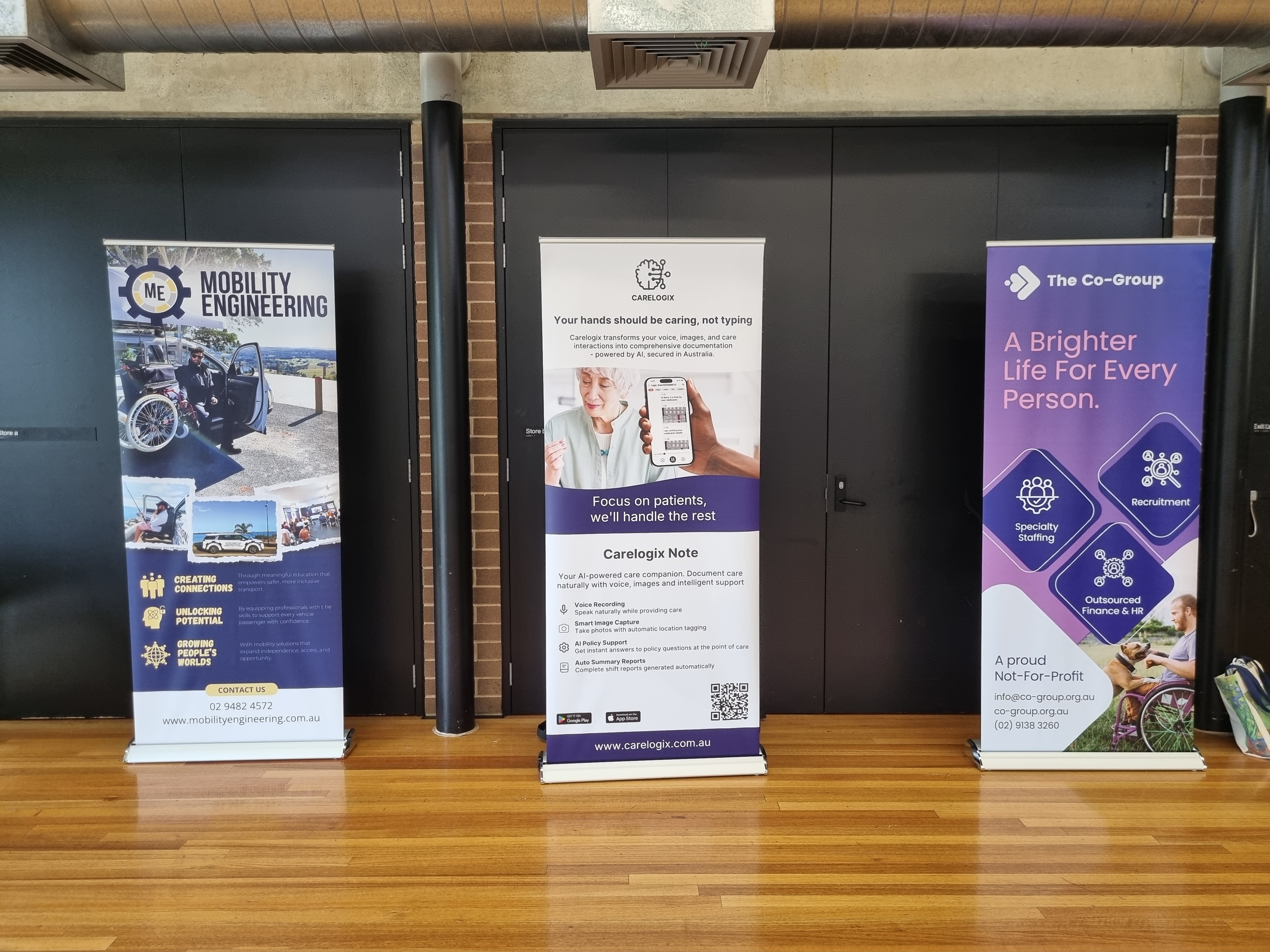
There are events you attend because they are on the calendar, and then there are events that stay with you. The February edition of Building Bridges was held at the Woodcroft Neighbourhood Centre in Sydney's north-west. From the moment guests walked through the door, it was clear this gathering was about something more than professional networking — it was about the community and people.
Building Bridges has always positioned itself as a platform to connect, educate, and empower those working in and around the disability sector. On the 26th of February, Thursday afternoon, the format delivered on that promise in ways that were at once practical, surprising, and deeply human.
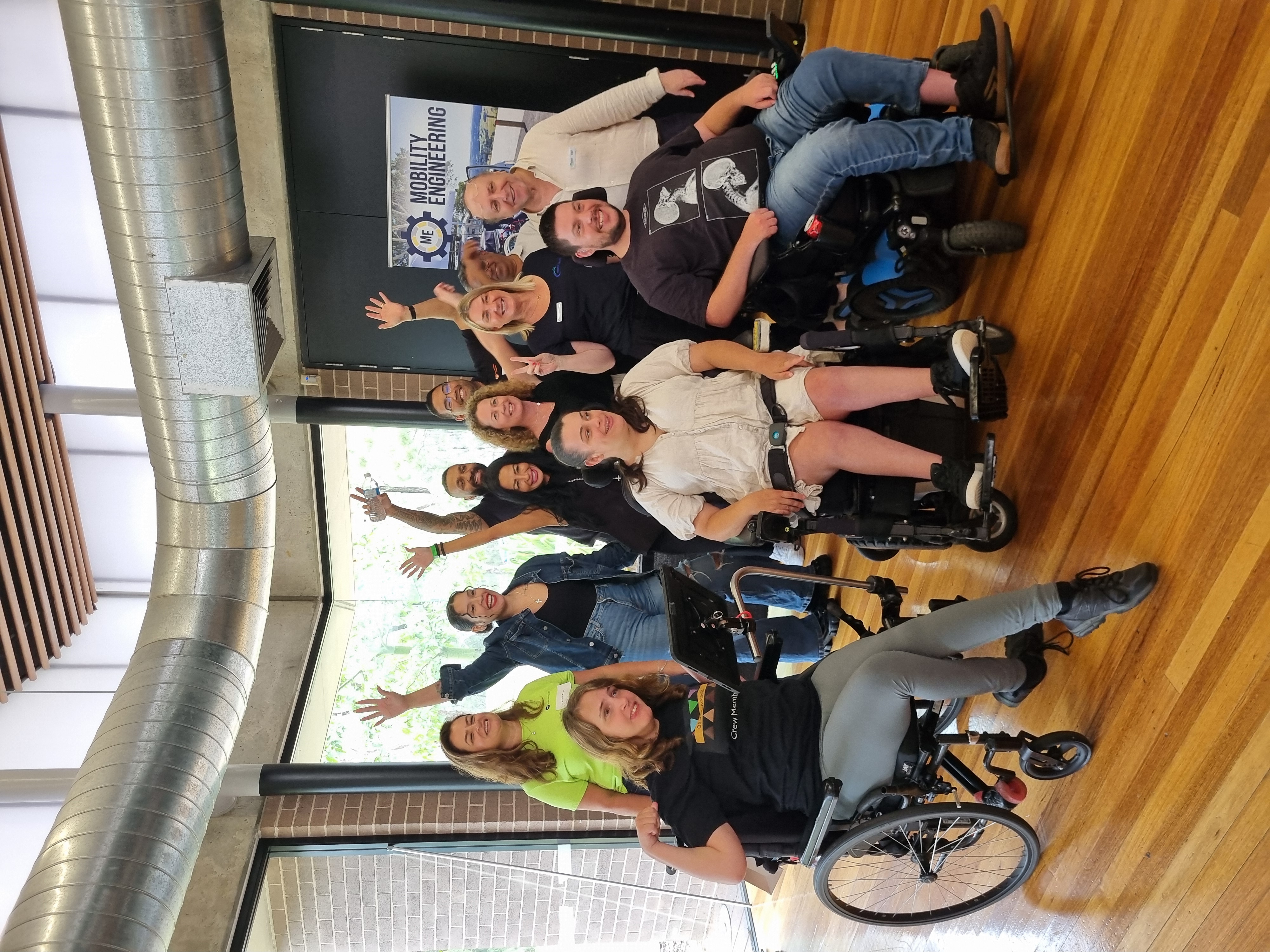
Some encounters reframe the way you think about communication entirely and walking in and was greeted by one of the panellist for the event, Gretta Serov, was one of those moments. Greta is non-verbal, and she communicates through a smart device with the help of assistive technology — in her case, nose-typing directly onto a smart pad, which then reads her words aloud through an AI-generated voice.
The exchange was simple enough: a hello, a name, a warm welcome. But the experience of hearing her words come back through that voice — measured, deliberate, entirely hers — carried a weight that is difficult to put into words. It was, in the most genuine sense, a bit emotional. Not because it was unusual, but because it was so deeply effective. A reminder that communication is not about the mechanism but about the meaning carried within it.
Hi, my name is Tommy! She took her time, nose-typed her reply, and the AI voice answered back. In that brief exchange, the environment shifted — a reminder of what technology, at its best, actually does for people.
Watching Greta take to the stage later in the session — communicating with an entire audience through the same method, with facilitator Earl guiding the discussion with skill and sensitivity — was one of the event's genuine highlights. Earl's facilitation created the space needed for Greta's voice to land clearly, and the audience responded with the attentiveness the moment deserved.
An Unmet Need Worth Solving
One practical note worth highlighting for any entrepreneurs or developers in the assistive technology space: it is understood that Greta experiences neck pain from the angle required to nose-type on her iPad over extended periods. This is a real and specific challenge — and one that is well within the scope of Assistive Technology (AT) products subsidised under the NDIS.
If you are working on wearable tech, adaptive mounting hardware, eye-gaze improvements, or any interface innovation that could reduce physical strain for nose-type users, there is both a genuine human need here and a funded pathway through the scheme. The intersection of compassionate design and commercial opportunity does not get much clearer than this.
Cobie Ann Moore
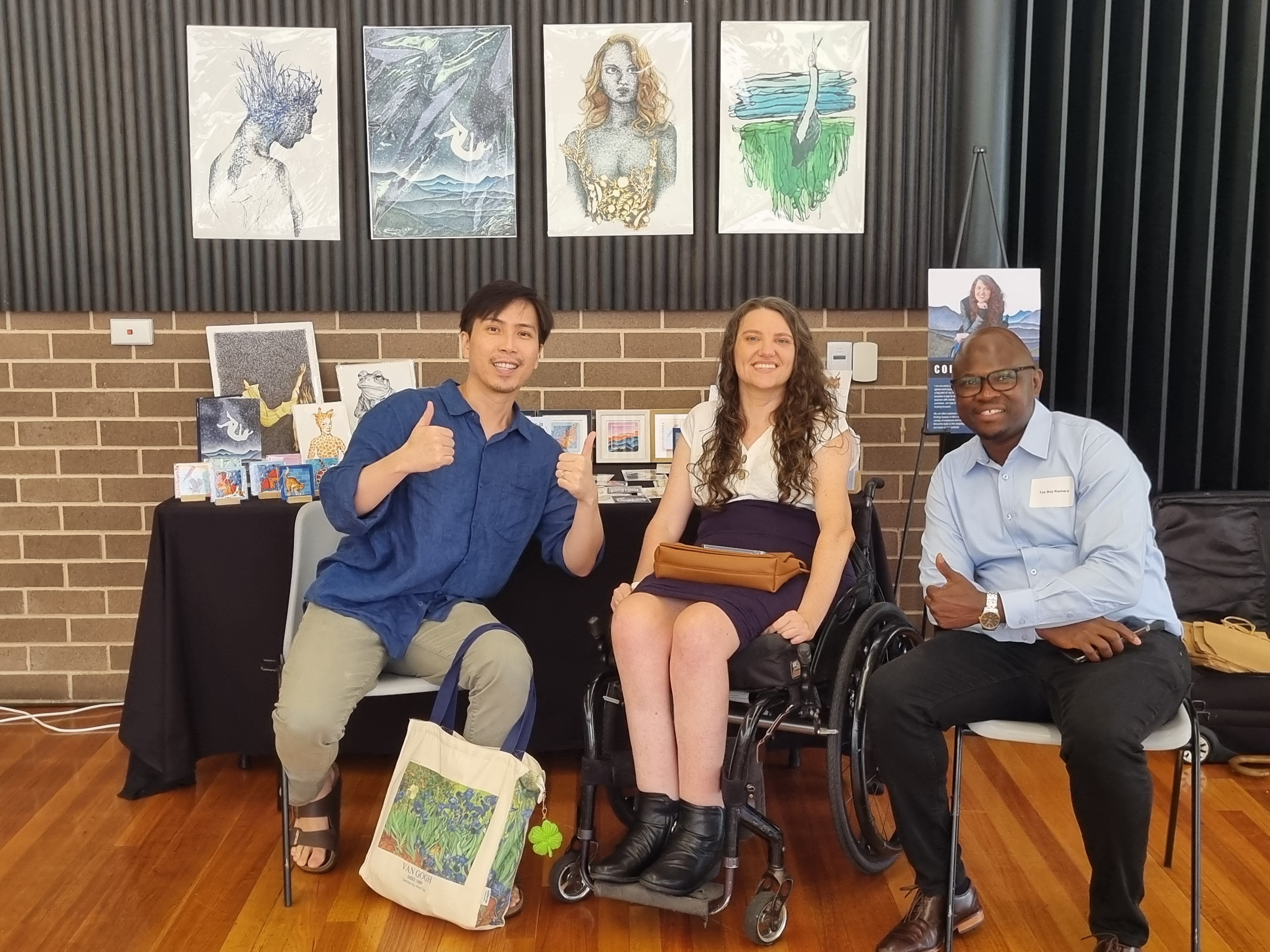
Among the vendors present at the event was Cobie Ann More — an artist whose work is as striking as her story. Cobie is a Sydney-based artist and designer whose practice is deeply connected to her personal journey. Following a life-changing accident that resulted in a spinal cord injury, Cobie rebuilt her relationship with art through rehabilitation, experimentation, and sheer determination, finding in creativity a language for what words sometimes cannot reach.
Her superpower is dot painting — intricate, layered works that carry both cultural resonance and a deeply personal voice. Her gallery is well worth your time, and supporting her work is a straightforward way to put money directly into the hands of someone building something remarkable from the ground up.
Cobie's work bridges personal narrative and artistic tradition. After a spinal cord injury redirected her life's path, she leaned into art as both therapy and expression. Her dot paintings are beautiful, purposeful, and deeply felt.
Find her gallery, follow her work, and consider supporting an artist who embodies exactly the kind of resilience and creativity that Building Bridges celebrates.
Gilani Mobility's Mobile Assessment Bus
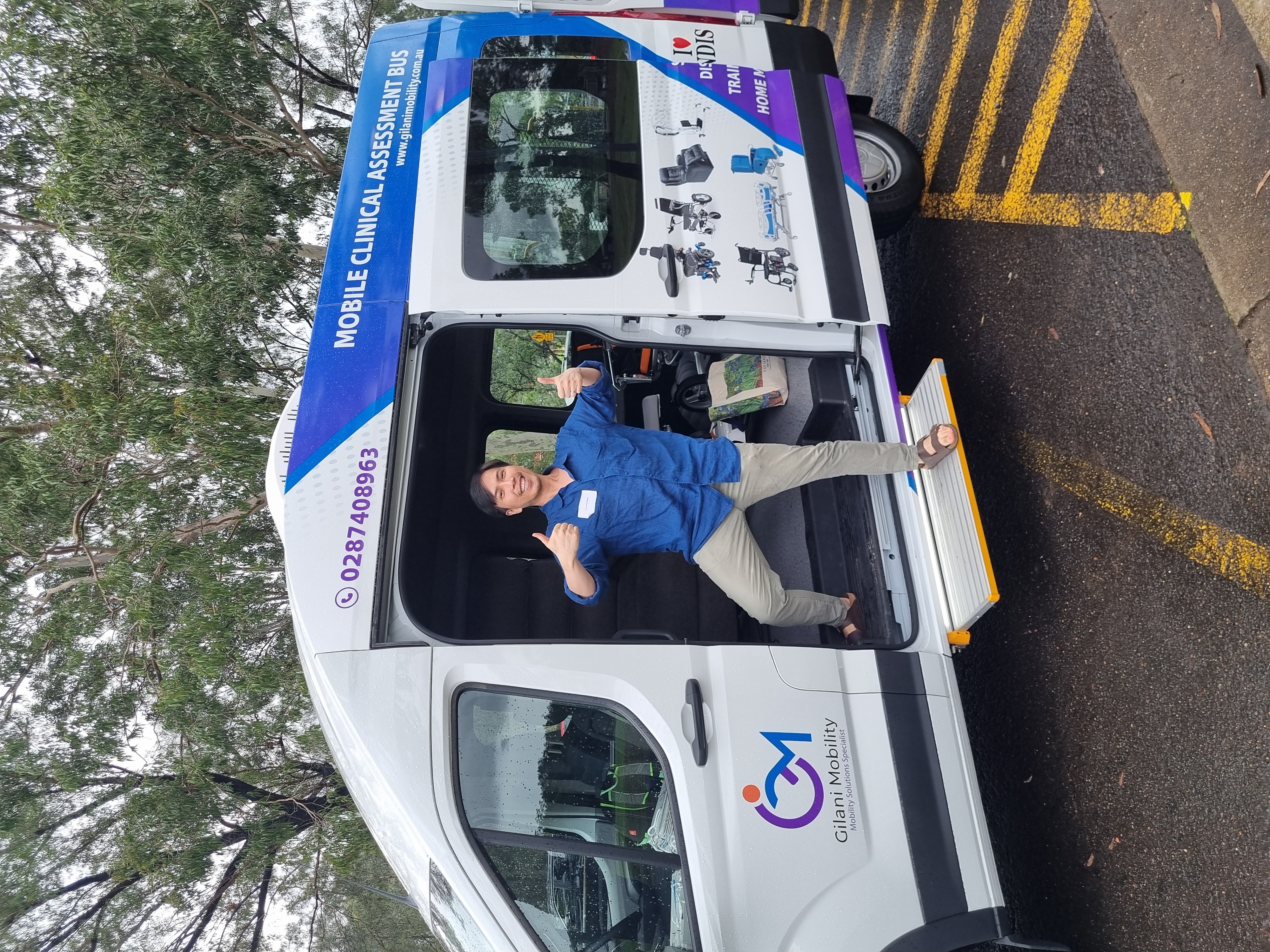
One of the most talked-about moments of the day was the unveiling of Gilani Mobility's Mobile Assessment Bus — a concept that sounds straightforward but is, in practice, a meaningful rethink of how mobility and accessibility assessments are delivered.
The premise is simple: rather than requiring participants to travel to a clinic or assessment centre, Gilani brings the entire evaluation to them. The bus can attend homes, hospitals, rehabilitation centres, schools, and workplaces, making the process genuinely accessible to people for whom travel is itself the barrier. Fitted out with assistive technology and mobility equipment, it gives participants the opportunity to try and assess products from the comfort and familiarity of their own environment — which, as any occupational therapist will tell you, makes a significant difference to both the experience and the outcome.
Attendees at the event received an introduction to how the bus works, what it is designed to support, and how providers and professionals might engage with it as part of coordinated, person-centred service delivery. Gilani Mobility's broader work spans mobility and accessibility solutions including equipment and home modification supports — and this unveiling sits comfortably within that mission as a practical, community-facing innovation.
What Building Bridges Actually Is
For those encountering Building Bridges for the first time, you will quickly notice that this is not a conference, it is not a trade show and it is a deliberately constructed community — a monthly gathering that brings together providers, professionals, and sector leaders in a format designed to break down silos rather than reinforce them.
Each event is built around two goals, by creating stronger connections between organisations and individuals, and focusing on practical, real-world growth that improves outcomes for participants. Sessions cover everything from NDIS reform and workforce development to innovation, leadership, and strategy. The format blends expert insights, open discussion, and genuine networking time.
The event also collects food donations at each gathering, distributed to local community organisations supporting individuals and families in need. It is a small gesture, but a consistent one — and in a sector where values are often stated but less often demonstrated, consistency matters.
Related Articles

NDIS Building Bridges Network Apr 2026
The April 30 edition of Building Bridges left attendees with something more valuable than a stack of brochures and a pocketful of business cards. It left them with a renewed sense of what is possible when the right people are in the same room.

NDIS Building Bridges Network Mar 2026
Building Bridges Network — March 2026 Recap: Trauma Informed Care The March 2026 edition of the Building Bridges Network brought together disability...

NDIS Building Bridges Network Jan 2025
The I-CAN tool has been trialled and endorsed by the Centre for Ability for approximately two years, but it has never been piloted under the NDIS itself — a fact that understandably has the sector on edge.